- If you have a high fever or any health problem, you will usually go to a hospital or clinic
- There....someone examines you, checks your symptoms, and finds out what problem you have
- They give medicines, treatments, or advice to help you recover from your health problem.
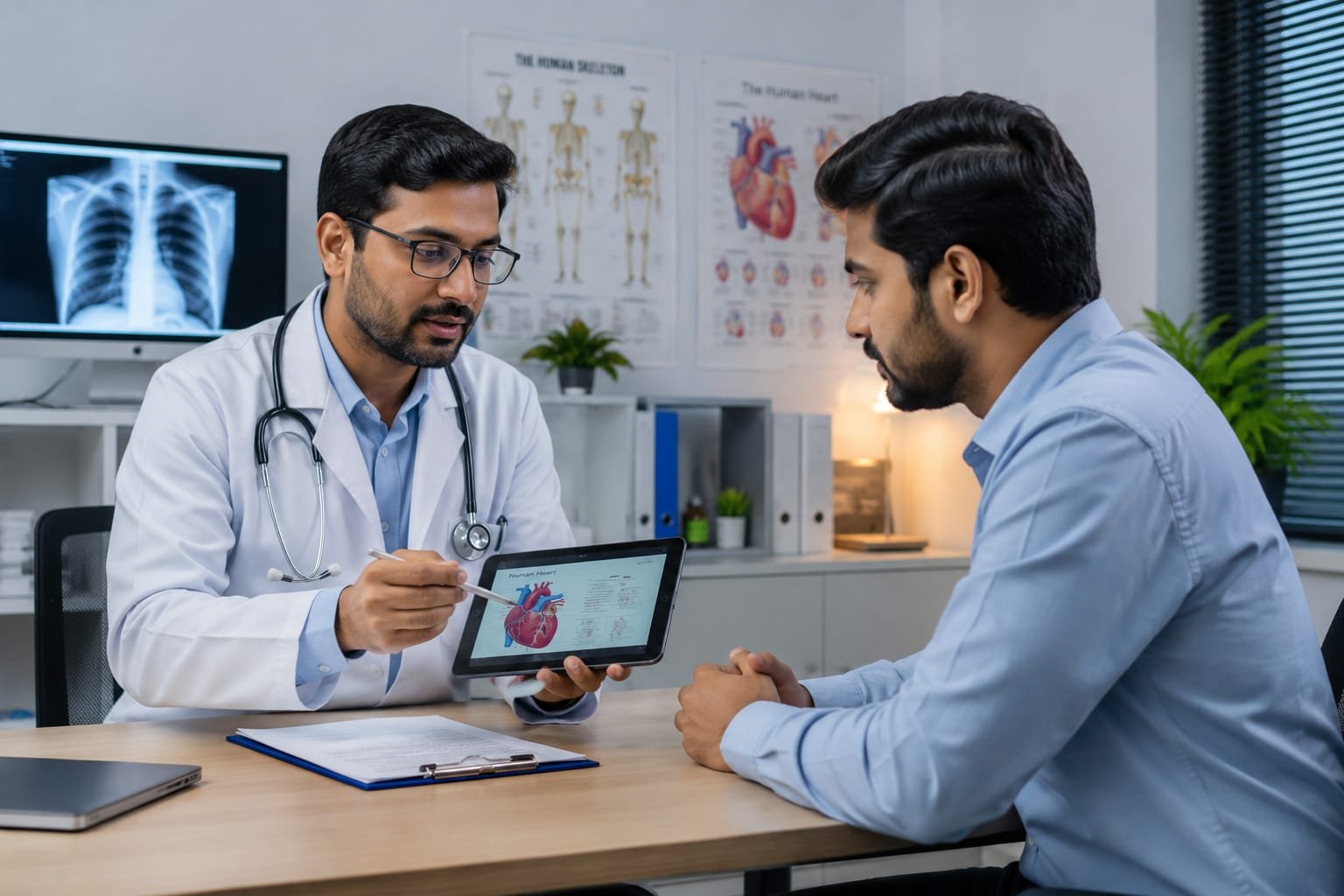
- That person is called a Doctor
- 👉 In simple words: Doctors find out health problems and treat people to help them stay healthy
Allopathic Doctor
What Do They Do?
🎓 How to Become a Doctor
The courses to pursue this career are given below :
These medical degree programs help students learn about the human body, diseases, diagnosis, treatments, surgeries, patient care, and healthcare systems.
MBBS (Bachelor of Medicine and Bachelor of Surgery)
Duration: 5.5 Years (Including 1 Year Internship)
Eligibility: 12th Pass with Physics, Chemistry, and Biology (Minimum 50% Marks)
Entrance Exam: NEET-UG
Note: MBBS programs include classroom learning, laboratory practice, hospital training, and internships to prepare students for real patient care and medical responsibilities.
These postgraduate medical programs help doctors specialize in different areas of medicine such as surgery, pediatrics, cardiology, dermatology, and more.
MD (Doctor of Medicine) / MS (Master of Surgery)
Duration: 3 Years
Eligibility: MBBS Graduate (With Completed Internship)
Entrance Exam: NEET-PG / INI-CET
Note: Postgraduate medical programs provide advanced clinical training, hospital practice, patient management experience, and specialization in specific medical fields.
Note:
(Age limits, marks, and admission process may vary depending on the college or state.
Below are some colleges that offer these courses.
These courses are available in many colleges and universities across India. You can choose colleges based on your location, budget, and entrance exams.)
🏛️ Colleges offering these courses in India
(Tap on a college to view details)
After Class 12
All India Institute of Medical Sciences (AIIMS), New Delhi Christian Medical College (CMC), Vellore Armed Forces Medical College (AFMC), Pune Maulana Azad Medical College (MAMC), New Delhi Jawaharlal Institute of Postgraduate Medical Education and Research (JIPMER), Puducherry Kasturba Medical College (KMC), Manipal Madras Medical College, Chennai King George's Medical University (KGMU), Lucknow St. John's Medical College, BengaluruAfter Graduation
All India Institute of Medical Sciences (AIIMS), New Delhi Post Graduate Institute of Medical Education and Research (PGIMER), Chandigarh National Institute of Mental Health and Neuro Sciences (NIMHANS), Bengaluru Sanjay Gandhi Postgraduate Institute of Medical Sciences (SGPGIMS), Lucknow Jawaharlal Institute of Postgraduate Medical Education and Research (JIPMER), Puducherry Sree Chitra Tirunal Institute for Medical Sciences and Technology (SCTIMST), Thiruvananthapuram King George's Medical University (KGMU), Lucknow Christian Medical College (CMC), VelloreSTEP 1
Imagine you are working as a Doctor in a hospital.
STEP 2
Patients visit you with different health problems, injuries, and medical emergencies.
STEP 3
You examine patients, listen to their symptoms, and diagnose their health conditions.
STEP 4
You provide treatments, prescribe medicines, and sometimes assist in surgeries or emergency care.
STEP 5
You monitor patient recovery, guide families, and work with nurses and other healthcare professionals.
STEP 6
If helping and caring for people excites you, this career may suit you.
Hospitals
Doctors treat patients, perform surgeries, and provide emergency medical care.
Clinics
Work in private or community clinics and provide treatments.
Medical Colleges
Teach medical students and conduct research.
Emergency Services
Doctors work in ambulances, trauma centers, and emergency departments.
Military & Government Health Services
Doctors may serve in the army, navy, air force, or public healthcare departments.
Research Centers
Work on medical research, new treatments, vaccines, and healthcare innovations.
(Click Yes or No for each question)
1. Do you like helping people?
2. Are you interested in learning how the human body works?
3. Are you interested in learning about diseases, medicines, and treatments?
4. Imagine you are working as an Allopathic doctor. A patient who is not well comes to you for help. You examine them, find the problem, and give treatment to help them recover. Does this excite you?
5. A seriously injured patient is brought to the casualty after a road accident. You examine the patient, check their injuries and vital signs, clean and dress their wounds, give stitching when needed, and provide the necessary treatment. You also need to act quickly to prevent the patient's condition from getting worse. Would you enjoy doing this type of work?