- Some people with serious kidney problems need dialysis to clean their blood.
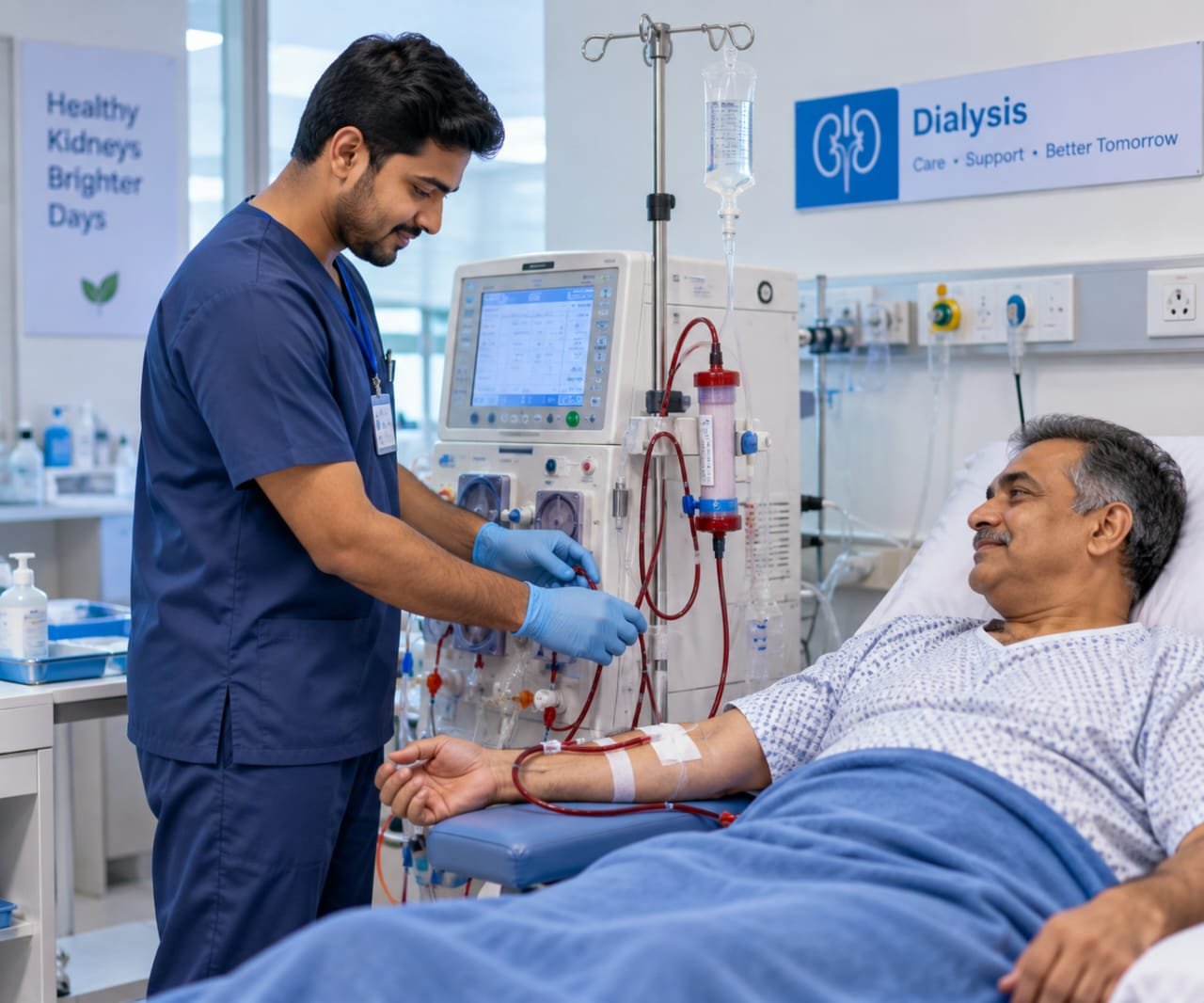
- The dialysis technologist / technician prepares the dialysis machine before the treatment.
- They connect the patient to the dialysis machine and start the treatment.
- During dialysis, they watch the patient and the machine to make sure everything is going well.
- They keep the equipment clean and safe to prevent infections.
- 👉 In simple words: A dialysis technologist / technician operates the dialysis machine and helps take care of patients during dialysis treatment.
Dialysis Technologist / Technician
What Do They Do?
🎓 How to Become a Dialysis Technician
The courses to pursue this career are given below :
After completing Class 12, you can pursue diploma or bachelor's degree courses in dialysis technology to learn about dialysis treatment, dialysis equipment, and patient care for people with kidney problems.
Diploma in Dialysis Technology (DDT / D.TT)
Duration: 2 Years
Eligibility: 12th Pass with Physics, Chemistry, and Biology/Mathematics (Minimum 45%–50% Marks)
Entrance Exam: State Paramedical Board Entrance Exams / Merit-Based
Bachelor of Dialysis Therapy Technology (B.DDT)
Duration: 3 to 4 Years (Includes Clinical Internship)
Eligibility: 12th Pass with Physics, Chemistry, and Biology (Minimum 50% Marks)
Entrance Exam: State-Level CETs / University Entrance Exams (e.g., AIIMS, KCET, Manipal MET) / Merit-Based
B.Sc. in Dialysis Technology / Renal Dialysis Technology (BRDT)
Duration: 3 to 4 Years (Includes Clinical Internship)
Eligibility: 12th Pass with Physics, Chemistry, and Biology (Minimum 50% Marks)
Entrance Exam: State-Level CETs / University Entrance Exams (e.g., AIIMS, KCET, Manipal MET) / Merit-Based
📝 Exam Details
(Click on the exam name to see full details)
Paramedical Entrance Exams University Entrance Exams State Level CET Merit-Based AdmissionNote: Admission requirements, course duration, and entrance procedures may vary between institutions and states.
After completing a bachelor's degree in dialysis technology or a related allied health field, you can pursue postgraduate studies to develop advanced knowledge and skills in renal dialysis technology.
M.Sc. in Renal Dialysis Technology / Master of Dialysis Therapy
Duration: 2 Years
Eligibility: B.Sc. in Dialysis Technology / Bachelor of Dialysis Therapy Technology (Minimum 50% Marks)
Entrance Exam: University PG Entrance Exams / Merit-Based
📝 Exam Details
(Click on the exam name to see full details)
University Entrance Exams Merit-Based AdmissionNote: Postgraduate course availability, eligibility requirements, and admission procedures may vary between institutions.
Certificate courses in dialysis technology can help you learn the basics of dialysis procedures, dialysis equipment, and patient care.
Certificate in Dialysis Technology
Duration: 6 Months – 1 Year
Eligibility: 10th or 12th Pass (Science Preferred)
Entrance Exam: Direct Admission / Institute-Level Merit
Note: Eligibility, course duration, and admission procedures may vary between institutions.
Note:
(Age limits, marks, and admission process may vary depending on the college or state.
Below are some colleges that offer these courses.
These courses are available in many colleges and universities across India. You can choose colleges based on your location, budget, and entrance exams.)
Colleges offering these courses in India
(Tap on a college to view the details)
After Class 12
Government Medical College, Thiruvananthapuram, Kerala Kempegowda Institute of Medical Sciences (KIMS), Bengaluru, Karnataka Amrita Vishwa Vidyapeetham, Kochi, Kerala Dr.D.Y.Patil School of Allied Health Sciences, Pune, Maharashtra SGT University, Gurugram, Haryana Govt. T.D. Medical College, Alappuzha, KeralaSTEP 1
Imagine you are working as a dialysis technologist / technician in a hospital.
STEP 2
A patient comes to the dialysis unit for their dialysis treatment.
STEP 3
You prepare the dialysis machine and equipment before starting the treatment.
STEP 4
You connect the patient to the dialysis machine with the help of the healthcare team.
STEP 5
You monitor the patient and the machine during the treatment.
STEP 6
If there is any problem, you inform the doctor or nurse immediately.
STEP 7
After the treatment, you disconnect the patient safely and clean the equipment.
STEP 8
If you like healthcare, working with machines, and helping patients, this career may suit you.
Government Hospitals
Help provide dialysis treatment to patients in government hospitals.
Private Hospitals
Work in dialysis units and take care of patients during treatment.
Kidney Care / Nephrology Centres
Work in centres that provide dialysis and other kidney-related care.
Dialysis Clinics
Operate dialysis machines and monitor patients during treatment.
Medical Colleges & Teaching Hospitals
Work in dialysis units while supporting patient care and clinical training.
Specialised Kidney Hospitals
Work with doctors and other healthcare professionals to provide dialysis care.
Abroad
Work in hospitals and dialysis centres after meeting the required qualifications.
(Click Yes or No for each question)
1. Have you heard of dialysis?
2. Are you interested in learning about how kidneys work?
3. Do you like to learn about how dialysis helps a patient?
4. Imagine you are working as a dialysis technician in a hospital. A patient comes for dialysis. You prepare the dialysis machine, connect the patient to the machine, and monitor the patient during the treatment. Would you enjoy doing this kind of work?
5. A patient comes to the dialysis unit for regular treatment. You need to prepare the machine, check the equipment, and get everything ready before the patient starts dialysis. Would you enjoy doing this kind of work?