- When you hear news on TV, YouTube, or read newspapers, have you ever thought "how they are getting all these informations?"
- Someone carefully collects them behind the scenes.
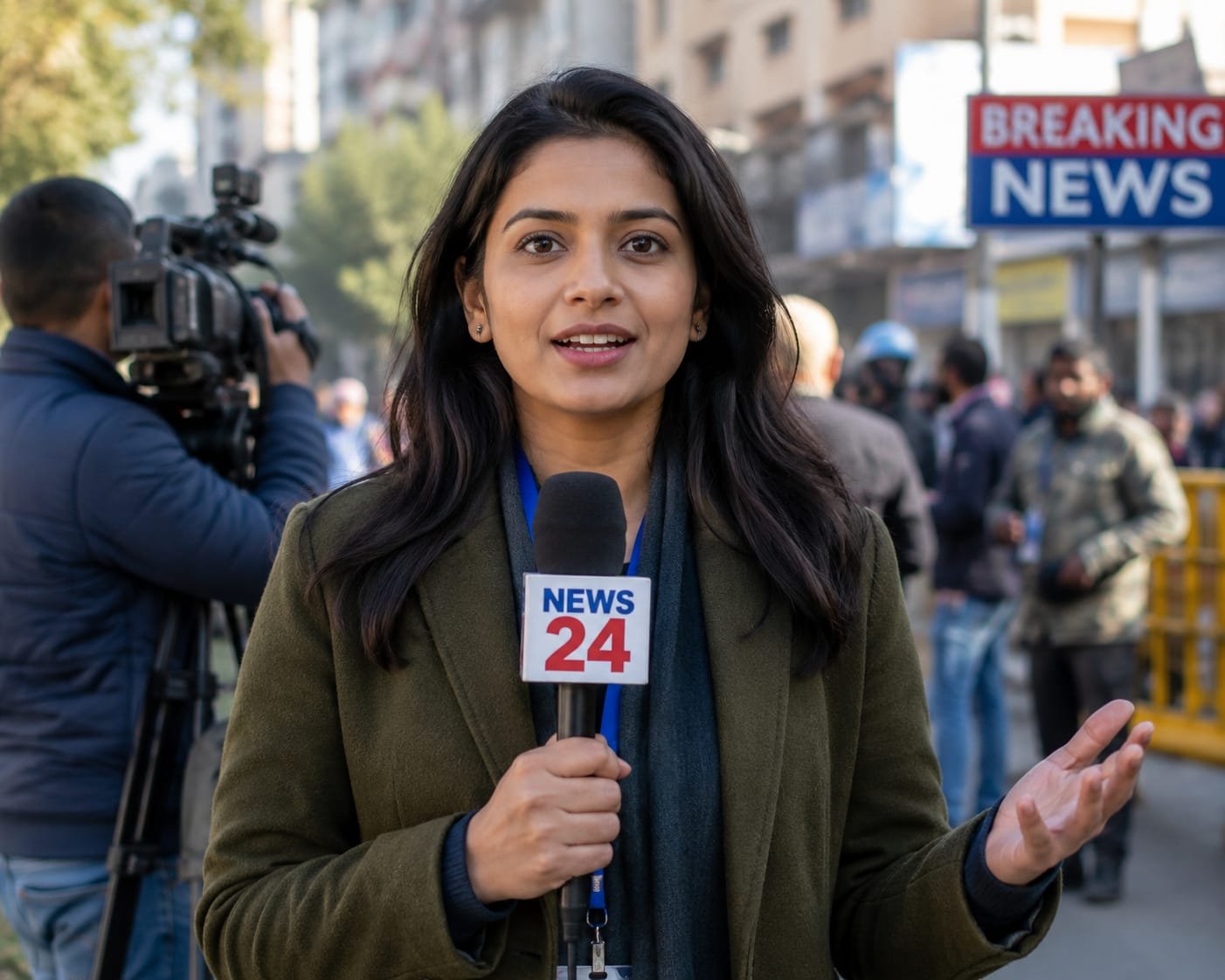
- These people are called Journalists.
- 👉 In simple words: Journalists find and share important news with people.
Journalist
What Do They Do?
🎓 How to Become a Journalist
The courses to pursue this career are given below :
These courses help students learn basic reporting, news writing, and media communication skills early.
Diploma in Journalism
Duration: 6 Months – 1 Year
Eligibility: Class 10 Pass
Entrance Exam: No Exam (Direct admission)
Note: Most journalism certificate courses after 10th do not require entrance exams.
These programs teach students broadcast news, anchoring, reporting, media communication, and journalism ethics.
B.A. (Hons) in Journalism and Mass Communication (BAJMC)
Duration: 3 – 4 Years
Eligibility: 10+2 Pass (Any stream)
Entrance Exam: CUET UG / Merit Based
BJMC (Bachelor of Journalism and Mass Communication)
Duration: 3 Years
Eligibility: 10+2 Pass (Any stream)
Entrance Exam: CUET UG / IPU CET / University-specific Entrance
Bachelor of Mass Media (BMM)
Duration: 3 Years
Eligibility: 10+2 Pass
Entrance Exam: University-specific entrance / Merit-based
B.Sc. in Electronic Media
Duration: 3 Years
Eligibility: 10+2 Pass
Entrance Exam: CUET UG / Merit-based
📝 Exam Details
(Click on the exam name to see full details)
CUET UG IPU CET University Entrance Exam Merit-based AdmissionNote: Some colleges admit students through CUET UG, while others use merit-based or university-level entrance exams.
Designed for graduates from any stream to specialize in investigative reporting, TV anchoring, digital journalism, and media production.
Post Graduate Diploma in Journalism
Duration: 1 Year
Eligibility: Bachelor’s Degree (Any stream)
Entrance Exam: CUET PG
M.A. in Mass Communication & Journalism
Duration: 2 Years
Eligibility: Bachelor’s Degree
Entrance Exam: CUET PG / University Entrance
PG Diploma in Journalism
Duration: 1 Year
Eligibility: Bachelor’s Degree
Entrance Exam: CUET PG / Institute Test
📝 Exam Details
(Click on the exam name to see full details)
CUET PG University Entrance Exam Institute TestNote: Many postgraduate journalism programs accept students through CUET PG, while some institutes conduct their own entrance tests or interviews.
Note:
(Age limits, marks, and admission process may vary depending on the college or state.
Below are some colleges that offer these courses.
These courses are available in many colleges and universities across India. You can choose colleges based on your location, budget, and entrance exams.)
🏛️ Colleges offering these courses in India
(Tap on a college to view the details)After Class 12
St. Xavier's College, Mumbai Delhi University, New Delhi Christ University, Bengaluru Asian Academy of Film & Television (AAFT), Noida IES University, Bhopal Jai Hind College, Mumbai Ghanshyamdas Saraf College of Arts & Science, Mumbai SNDT Women's University Makhanlal Chaturvedi National University of Journalism and Communication, Bhopal M.O.P. Vaishnav acollege for Women, ChennaiAfter Graduation
Indian Institute of Mass Communication (IIMC), New Delhi Xavier Institute of Communications (XIC), Mumbai Symbiosis Centre for Distance Learning (SCDL), Maharashtra Jain University, Bengaluru Chandigarh University, Punjab Indian Institute of Mass Communication (IIMC), New Delhi Asian Academy of Film & Television (AAFT), Noida Asian College of Journalism (ACJ), ChennaiSTEP 1
Imagine you are working as a journalist.
STEP 2
You hear that a major accident happened in a factory.
STEP 3
You visit the place and collect all the important information.
STEP 4
You interview people and eyewitnesses to understand what happened.
STEP 5
Based on the details, you write a news report.
STEP 6
Finally, your report is published on TV or online media.
STEP 7
If this excites you, this career may suit you.
Where do Journalists work? (Job Roles + Growth)
Journalists work in : Newspapers, Magazines, Television news channels, Radio stations, Digital news organisations, News agencies, Online media platforms, and as Freelance journalists.
🟢 Beginner Roles
Junior Reporter
(After BAJMC / BJMC / BMM)
Gathers local news and writes basic event reports.
Content / News Writer
(After BAJMC / BJMC / BMM)
Writes quick news updates and summaries for media websites.
Script Assistant
(After B.Sc. in Electronic Media)
Helps check facts and draft scripts for news and radio broadcasts.
🔵 Mid-Level Roles
News Reporter
(After BAJMC / BJMC + Experience)
Interviews people and covers live breaking news stories.
TV Anchor / Presenter
(After B.Sc. in Electronic Media / BJMC + Experience)
Hosts live studio news bulletins, debates, and special programs.
Sub-Editor
(After BAJMC / BJMC + Experience)
Reviews reports, corrects grammar, and creates news headlines.
🟣 Advanced Roles
News Editor
(After PG Diploma in English Journalism + Experience)
Decides which stories get published and manages reporting teams.
Radio / TV Producer
(After PG Diploma in Radio and TV Journalism + Experience)
Oversees the creative and technical production of news programs.
Editor-in-Chief
(After M.A. in Mass Communication & Journalism + Experience)
Controls the editorial direction, policies, and strategy of the news organization.
International Content Agencies
To create blogs, website content, and marketing materials for global brands.
Global Freelance Platforms
They connect you with international clients through platforms like Upwork and Fiverr.
Remote Corporate Roles
They allow you to work from India for overseas technology and media companies.
Digital Publishing Platforms
They help writers publish blogs, newsletters, and articles for worldwide audiences.
(Click Yes or No for each question)
1. Do you like knowing about what is happening around the world?
2. Do you follow news on a regular basis?
3. Have you ever thought about sharing important news with people?
4. Imagine you are working as a Journalist for a news channel. A big sports event is happening in your city, and you are asked to cover it. You go to the event, talk to people, and collect information about what is happening. You then report the event live from the location and share the latest updates with the viewers. Finally, people watching the news can know what is happening. Do you like this type of work?
5. A crime has happened in your city, and a news channel sends you to report from the scene. You go to the location, speak to people nearby, and collect information about what happened. You speak to the police and share the latest information with the viewers. Finally, people watching the news understand what happened and get the latest updates from the scene. Do you like this type of work?